

November 5, 2025
This update covers information from the last updated on September 15 to the end of October.
Contact information, FWP Region 2 (R2) Bear Team: fwpr2bearlionreports@mt.gov, 406-542-5500.
HIBERNATION
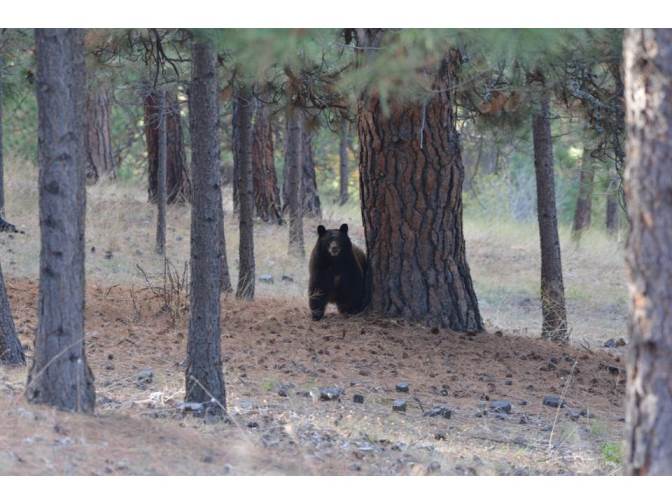
Some bears have started to den, but the public should expect continued bear activity through December. Each year, individual bears continue to seek out —including big game gut piles and unretrieved carcasses—into December. The last of the bears usually den up the week before Christmas.
WHY ARE PEOPLE SEEING FEWER BEARS NEAR HOMESITES THIS YEAR?
A “Good Food Year” for Bears: FWP continues to field calls about the noticeable absence of bear activity in Missoula’s residential areas this year. This decrease is likely due to a combination of abundant natural food sources and ongoing community efforts to reduce human-bear conflicts. On a year such as this, where natural bear foods have been abundant and readily available, the number of bear conflicts and observations within and surrounding urban settings and rural home sites are reduced.
Don’t be mistaken, bears are still active and living in the area. The bears are using adjacent habitats and feeding on abundant natural food sources. Remain diligent with containing residential attractants. Even on low bear-activity years, when black bears and grizzly bears are hunkered down in the low elevation berry fields or high elevation huckleberry patches, you want to make sure that your garbage is always locked up, bird feeders are down, chickens and small livestock are contained behind electric fence (that is working 24/7), and that you are running a “clean camp”. This is especially important if you live in an area that has had past issues. You never know when bears might be passing by and the last thing you want is to train a bear to seek out household and agricultural food sources. Once bears learn and develop food-conditioned behavior, they will return or begin investigating other home sites—a behavior that often leads to their demise and can increase risk to people.
A “Bad Food-Year” for Bears: On the opposite end of the spectrum, however, is the dreaded “natural food-failure year”. A bear famine can occur regionally or on a statewide level. Every 5 to 12 years, due to an unusual late frost or some unpredictable cyclic environmental condition, the natural foods that bears come to rely on fail to produce. In such years, berry crops are nonexistent, food-source locations become unpredictable, and bears begin roaming far and wide in a desperate search for alternative foods. During a famine year, the population enters crisis mode: bears starve, females abandon their cubs, mortality rates rise, and residential or agricultural bear conflicts skyrocket.
Even a bear smart community such as Missoula will experience bear-related conflicts in a bad food year. There can be tremendous variation across the state. In 2022, for example, the Missoula Valley experienced a natural food-failure while other areas had low conflict. A food-failure can even occur on a micro scale. For example, in 2024, the community of Anaconda experienced a major food-failure while the rest of Region 2 had ample food supplies. One of the worst crisis years occurred in the late 1990s, when a state-wide natural food-failure led to the highest bear mortality on record.
Bears that survive a famine year remember where they found unnatural food sources—such as garbage, livestock feed, or birdseed—and often return to those areas in following years. That’s why it’s critical to always keep attractants secured, even when natural food is plentiful.
For more information on what bears eat, check out the Grizzly Bear Diet Reference Guide (FWP, 2024)
CHICKENS AND BEARS
In October, a grizzly bear was euthanized in Potomac after accessing multiple chicken coops. In the Lincoln area, at least three different grizzly bears have broken into chicken coops. During the last year, FWP R2 responded to at least 30 incidents of black bears, grizzly bears, mountain lions, and other predators getting into chicken feed and or killing chickens. Depredations on chickens and incidents of bears accessing uncontained chicken feed have increased tenfold as more and more people have become interested in raising chickens in bear country.
To reduce the risk of conflict:
- Store all pet and livestock feed inside a locked building or within a secure, bear-resistant container.
- Avoid allowing chickens to free range.
- Keep chickens within an electrified enclosure and house them in a sturdy, predator-resistant coop.
- Remember: an electric fence only works when it’s powered on. Several incidents this summer occurred because fences were inactive. Fences should be maintained and energized year-round.
Electric fencing remains one of the most effective tools for deterring bears and other predators. For more information, including technical or financial assistance for installing electric fencing, contact FWP Region 2.
Explore these resources to help you build and maintain effective electric fencing and reduce conflicts with wildlife:
- Defenders of Wildlife – Electric Fencing for Bears (YouTube Video)
- Defenders of Wildlife – Electric Fence Incentive Program
- People and Carnivores – Electric Fence Manual
- FWP – Electric Fence Guide
HYPERPHASIA AND HIGHWAY/RAILROAD MORTALITY
In the fall both species of bear enter hyperphagia, a time when they are traveling far and wide eating as much food as possible in preparation for denning. They can spend almost 20 hours a day searching for food! During their travels bears are more vulnerable to trains and vehicles as they attempt to cross highways, interstates, and railroads. Since the last update, a total of five black bears were struck and killed by vehicles and four black bears were hit by trains.
On September 11th a grizzly bear was killed by a train west of Garrison Junction and two grizzly bears were killed by a vehicle on Hwy 83 north of Seeley Lake, while feeding on a dead deer. If you observe a grizzly or black bear feeding on a road-killed animal along a busy highway, please contact FWP or MDOT immediately. Prompt removal of carcasses from roadways helps prevent further accidents and protects eagles, scavengers, and bears from being struck, injured, or killed.
Note: An individual recently removed the head and front feet from one of the dead grizzly bears. Grizzly bears are federally protected, and it is illegal to possess any parts or pieces of a grizzly bear. It is also illegal in Montana to salvage road-killed black bear or mountain lions.
This is the most important time of year to remain vigilant and secure garbage, bird feeders, livestock feed, and other attractants to reduce human–bear conflicts.
REGION-WIDE
In September and October, natural bear foods were abundant across FWP R2. Even after the first frosts in October, chokecherries and hawthorn were still available, and huckleberries remained in the higher elevations until mid-October. Other berries, including kinnikinnick, buffalo berry, elderberry, snowberry, rosehip, dogwood, juniper berry, and mountain ash are still available.
During the last weeks of October, there was an upsurge of bears moving into the lower elevations to feed on apples and plums. Compared to previous years, however, human–bear conflicts remained minimal. Although fewer bears are being observed within communities, hunters have been seeing bears in the back country, front country, rural areas, and along urban fringes. There were a handful of reports during bow season of bears scavenging gut piles and carcasses.
Rifle Season Precautions: During rifle season be aware that both black bears and grizzly bears will be scavenging big game carcasses. Always:
- Carry bear spray, know how to use it.
- Check for grizzly activity when returning to collect harvested big game.
- Follow food storage order regulations when camping.
For more information on grizzly bears, bear behavior, bear attractants, and hunting in bear country, visit:
- FWP Be Bear Aware
- Missoula Bears Attractant Management
- Montana Grizzly Country Hunting Information
- FWP Hunting in Grizzly Country Brochure (2023)
- Food Storage Regulations (Be Bear Aware) – IGBC
Although cooler temperatures and early snow have arrived, some bears will remain active into December. Avoid putting out bird feeders until December 1, and if bears are still active in your area, wait until late December.
Grizzly Bear: FWP has fielded reports of grizzly bear activity across the Clearwater and Blackfoot drainages, including near Garrison Junction, Deer Lodge Valley, Georgetown Lake, Upper Rock Creek, and the Big Hole Valley. Grizzly bears are slowly expanding into their historic range. Additional grizzly bear activity has been reported in the Ninemile Drainage, Missoula’s North Hills, and the Bitterroot Valley.
Most of these grizzly bears are just traveling through and/or feeding on natural foods, but a handful have investigated residential sites for garbage and other attractants.
- In the Potomac Valley, a lone grizzly was euthanized after accessing uncontained chickens and livestock feed. FWP encourages all Potomac residents with chickens or small livestock to store feed in enclosed buildings and protect livestock with electric fencing.
- In the Lincoln area, several chicken coops have also been accessed by grizzly bears. Free-ranging chickens and uncontained feed are major attractants for all predators. For information on landowner electric fence financial assistance, contact FWP R2.
Black Bear: Black bear activity remains steady in residential, urban-wildland, and rural areas, with most sightings involving bears feeding on natural foods. However, some conflicts have occurred involving fruit trees, unsecured garbage, bird feeders, chicken coops and livestock feed. Again, even when bears are behaving, please store all attractants in a bear-resistant manner and remove bird feeders. Keep garage doors closed and only put garbage out on morning of pickup. Bear-resistant cans are available through Grizzly Disposal, Republic Services, Bitterroot Disposal, and now Anaconda Disposal and Tri-County Disposal in Helena. If your sanitation provider doesn’t offer bear-resistant cans, let them know you are interested and encourage them to provide a bear-resistant option.
Mountain Lion: FWP continues to receive reports of mountain lion activity across Region 2. Where deer or elk are present, lions are likely nearby. Feeding and salting wildlife is illegal in Montana and in addition this activity encourages lions and other predators to visit your property. Mountain lions are also attracted to any areas with a concentration of turkeys. Please do not feed turkeys. And be aware that lions are also attracted to homesites with house cat activity. Lions are territorial and can be lured into areas where housecats are marking their territory.
Missoula Bear Buffer Zone Update: As of April 30, 2025, Phase 2 of Missoula’s garbage ordinance—covering the University District and South Hills—requires all garbage in the bear-buffer zone to be stored in a bear-resistant manner. If you notice any dumpsters or garbage cans in Phase 1 or Phase 2 that are not bear-resistant, please call Republic services (406-532-7866), Grizzly Disposal (406-370-6660) or call FWP R2 (406-542-5500). Phase 3 (covering the rest of the buffer zone in the Missoula Valley) begins April 30, 2026. Since Phase 1 and Phase 2 have gone into effect, bear conflicts have significantly declined. Learn more at the Missoula Bears Community Resources page.
Bear-Resistant Dumpsters and Cans: Human Error & Tampering: In the Missoula and Potomac Bear Buffer Zones, most bear-resistant containers accessed by bears result from human error, such as improper latching. However, some are intentionally disabled—this is considered vandalism and may result in a ticket. Note, steel bear-resistant dumpsters need to be locked tightly with carabiners or locks at the three locations where it attaches to the main frame of the dumpster. Any dumpster that is not locked to the main frame of the dumpster is in violation. If you see misuse or suspect tampering, contact FWP Region 2 or Missoula Animal Control.
Potomac Bear Buffer Zone: Since September 1, 2024, the Missoula County Potomac Valley Bear Mitigation Area ordinance requires all garbage to be stored in a bear-resistant manner. If you notice any dumpsters or garbage cans that are not bear-resistant please call Republic services (406-532-7866), Grizzly Disposal (406-370-6660) or call FWP R2 (406-542-5500). Since the ordinance took effect, bear conflicts have significantly decreased—helping to protect both wildlife and the community.
ALBERTON, PETTY CREEK & NINEMILE
Grizzly Bear: FWP continues to receive reports of grizzly bear activity in the Alberton and Ninemile drainages. No conflicts have been reported.
Black Bear: There have been no recent reports of black bears accessing residential attractants, but bears remain active and are currently feeding on abundant natural foods. As fall progresses and bears prepare for denning, some bears may begin seeking out frozen domestic fruit, residential attractants, and harvested big game. Remember to store any harvested deer or elk in a locked building. Alberton is taking action to become a Bear Smart Community and has received grant funding for bear-resistant garbage cans.
Visit the Bear Smart Alberton Facebook Page or the Ninemile Bear Aware website for more resources and ways to help reduce human-bear conflicts.
Mountain Lion: Lions remain commonly seen throughout these areas. Lions use game trails associated with salt licks and will also key into areas where wild turkeys roost. Salting and feeding for the purpose of luring in wildlife is illegal in Montana. In September, several lions were observed at residences in Alberton.
ANACONDA, GEORGETOWN, PHILIPSBURG, UPPER ROCK CREEK & BUTTE
Grizzly Bear: FWP continues to get verified reports of grizzly bear activity in the Anaconda and Georgetown areas. Please secure garbage and use electric fencing around chickens and small livestock.
Black Bear: Black bears are active throughout the upper Clark Fork Drainage. Several black bears have been accessing garbage and fruit trees in Anaconda. A black bear broke into a trailer house that was being temporarily used to store garbage in Anaconda. FWP assisted the homeowner with a temporary electric fence. Bear-resistant garbage cans are now available through Anaconda Disposal. A black bear was trapped and destroyed after accessing garbage in Butte.
FWP, partner organizations, the Anaconda’s urban wildlife task force, Anaconda Disposal, Washoe Park, and the Anaconda Job Corp are working together to reduce bear conflicts. The community of Philipsburg is also working with FWP to reduce bear conflicts. If residents in Butte are interested in establishing a Bear Smart Community Working Group, contact Brad Balis with FWP (406-465-9343).
Mountain Lion: Lions remain commonly seen throughout these areas. In late September, a lion was observed near a residence in Philipsburg and a lion cached a deer in a back yard in Anaconda in October. Lions use game trails associated with salt licks. Salting and feeding for the purpose of luring in wildlife is illegal in Montana.
BITTERROOT VALLEY
Grizzly Bear: There have been a handful of unverified reports of grizzly bear activity in the Sapphire Range. Grizzly bear activity has been verified on the Rock Creek side of the mountain range. FWP responded to a report from a hunter of a possible grizzly bear taking over a harvested elk in the Bass Creek area, but it appeared to be a black bear.
Black Bear: Report bear sightings/incidents and learn how to get involved with community bear aware efforts through Bitterroot Bears. Black bear activity has been widespread across the Bitterroot Valley, with numerous bears seen feeding on apples and fruit in back pastures. Most bears are sticking to natural food sources along rivers and drainages, and human-bear conflicts have been minimal so far. However, a few incidents have occurred:
- A black bear was captured and relocated out of downtown Hamilton.
- A black bear with cubs got into garbage and fruit trees at a residence near Florence. One of the bears opened a vehicle. FWP assisted the resident with picking the apples and garbage containment and the bears moved on.
Mountain Lion: Lion activity and reports of cached prey species are commonly reported along the river bottoms and foothills where deer and elk are present. Feeding or salting for wildlife is illegal and can attract mountain lions. The department of Agriculture’s Wildlife Services removed a lion that had killed a goat in the Corvallis area. Electric fencing is effective in protecting small livestock from lions. For information on financial assistance for electric fence contact FWP R2.
UPPER BLACKFOOT AND CLEARWATER VALLEYS
Grizzly Bear: Grizzly bears are active across the Blackfoot and Clearwater drainages, particularly around Ovando, Helmville, Lincoln, and Seeley Lake.
Recent Activity Highlights:
- Seeley Lake area: Multiple grizzly bears photographed on game cameras—most feeding naturally or passing through.
- Seeley Lake area: Two sub adult grizzlies were struck and killed by a vehicle on Highway 83 north of Seeley Lake near Camp Creek. Prior to being struck the bears were observed feeding on a dead deer.
- Nevada Creek (Hwy 141): Several grizzly bears photographed feeding on caraway.
- Aunt Molly WMA: Grizzly bears observed by bowhunters and river users feeding near the Hwy 141 bridge.
- Big game hunters have been observing grizzly bears feeding on gut piles throughout the area. For more information on hunting in grizzly country, see the Hunting in Grizzly Country Brochure (2023)
- Lincoln Area: A female grizzly bear with yearlings accessed uncontained garbage on a back porch. Please store all garbage in a locked building or bear-resistant container.
- Lincoln Area: Several different grizzly bears got into uncontained grain stored within two different chicken coops. Electric fence is recommended for raising chickens in bear country. Store chicken feed in a locked, steep container or inside a locked building.
Black Bear: Black bears are active throughout the upper Blackfoot and Clearwater Drainages. Conflicts have been minimal and most of the bears being observed have been travelling through or feeding on natural foods. In Lincoln, a black bear pulled down a bird feeder. In bear country, FWP recommends that bird feeders only be placed outdoors between December 1st and March 31st. If bears are still active in your area in the end of November, wait until end of December to put out bird feeders. Any bird feeding stations left up during the spring, summer, and fall should be contained within electric fence.
Mountain Lion: Lions are common throughout the area. A lion killed and cached a deer near a house east of Ovando. FWP removed the carcass and the lion moved on.
DRUMMOND, HALL & MAXVILLE
Grizzly Bear: FWP has verified reports of grizzly bear activity throughout the foothills of the Garnet Mountain Range. A grizzly bear was photographed in the Flint Mountain Range southeast of Maxville. Grizzly bears continue to recolonize this area.
Black Bear: Black bears are active in the surrounding mountains and along the riparian corridors. In past years, black bears have entered Drummond and other communities for domestic fruit. Picking and removing fruit will alleviate any issues from occurring. Electric fencing is effective for protecting fruit trees.
Mountain Lion: Lions remain commonly seen throughout these areas.
EAST MISSOULA, MILLTOWN & BONNER
Grizzly Bear: FWP continues to receive reports of grizzly bear activity in the Missoula North Hills and Rattlesnake Wilderness. Hunters have been reporting tracks and grizzly activity in Gold Creek and Twin Creek. Carry bear spray, know how to use it, and stay alert—grizzly bear activity is increasing.
Black Bear: Black bears are being observed feeding on natural foods throughout the area. Bear conflicts have been minimal, but residents are encouraged to remain diligent in securing attractants. A black bear accessed uncontained garbage at a residence in in Milltown. A black bear was road-killed on Highway 200 just out of Bonner.
This area is part of Phase 3 of the Missoula Bear Buffer Zone, with bear-resistant can rollout starting April 2026. Residents are encouraged to request cans from their waste providers now. Visit the Bear Smart Missoula website for details on the buffer zone and garbage ordinance.
Mountain Lion: Lions remain commonly seen throughout these areas. A lion reportedly killed a house cat in East Missoula. Be aware that lions are also attracted to homesites with house cat activity. Lions are territorial and can be lured into areas where housecats are marking their territory.
EVARO HILL
Grizzly Bear: Verified reports confirm grizzly bear activity. Grizzly bears are slowly recolonizing the area, becoming more common in recent years.
Black Bear: Black bears have been observed, but no conflicts have been reported. Always be prepared for bears, even when bears are behaving—secure attractants and protect livestock with electric fencing. Bear-resistant cans are available from Republic Services and Grizzly Disposal. Contact FWP for info on electric fencing, bear awareness programs, or neighborhood efforts.
Mountain Lion: Lions remain commonly seen throughout these areas.
GOLD CREEK, GARRISON JUNCTION, LITTLE BLACKFOOT VALLEY & DEER LODGE VALLEY
Grizzly Bear: Grizzly bear sightings are increasing in the Garrison Junction and Deer Lodge Valley areas, likely due to proximity to the Blackfoot Valley. Multiple grizzly bears and reports of tracks have been observed in and around Garrison Junction. Wildlife Services verified a calf depredation in the Avon area. Grizzly bears are expanding their range—residents and landowners should stay alert and be proactive by containing attractants in a bear-resistant manner.
Black Bear: While no black bear conflicts have been reported at this time, bears are actively feeding on natural foods in the area. Two black bears were hit by trains in the Garrison Junction area. A black bear was struck and killed by a train near Jens. A second black bear was killed by a train near Phosphate. And as mentioned in the last update, a grizzly bear was killed after being struck by a train west of Garrison Junction. Bears are now traveling widely in search of food. Please contain all attractants and contain all vulnerable livestock behind an electric fence and encourage local sanitation providers to offer bear-resistant cans. Secure attractants and protect livestock with electric fencing. Contact FWP for info on electric fencing, bear awareness programs, or neighborhood efforts.
Mountain Lion: Lions remain commonly seen throughout these areas.
GRANT CREEK & BUTLER CREEK
Grizzly Bear: Grizzly bear activity has been reported in Upper Grant and Butler Creeks. Hikers, bikers, and runners should carry bear spray, know how to use it, and pay attention while on trails.
Black Bear: Multiple black bears have been seen feeding on natural foods. Conflicts with black bears have been minimal in the last two years. FWP attributes the decline to placement of bear-resistant garbage cans (Missoula Valley ordinance Phase 1) and Friends of Grant Creek’s outreach. All residents and businesses in this area are required to have all garbage contained. For info on electric fence incentives, bear safety, or neighborhood programs, contact FWP or visit Bear Smart Missoula for information on the Bear Buffer Zone and the Missoula Garbage Regulations.
Mountain Lion: Mountain lion activity is common throughout Grant Creek.
LOLO
Black Bear: Black bears have been observed feeding on natural foods. Recently, a female black bear and two cubs were reported to be accessing garbage on both sides of Hwy 93, south between Missoula and Lolo. The female was later struck and killed by a vehicle.
In past years, black bears have entered Lolo for domestic fruit. Picking and removing fruit will alleviate any issues from occurring. Electric fencing is effective for protecting fruit trees.
This area has a history of chronic human-bear conflicts around attractants such as garbage and bird feeders. To reduce risk:
- Secure all garbage, bird feeders, and other attractants.
- Bear-resistant garbage bins are available through Republic Services and Grizzly Disposal.
- For information on electric fence incentive programs, bear safety, or neighborhood bear awareness efforts, contact FWP Region 2.
Mountain Lion: Mountain lions are common throughout Lolo Creek area. A lion was observed predating on feral house cats in the Lolo Hot Springs area. Be aware that feral cats have become part of the natural prey base for lions. Lions are territorial and are attracted to house cats marking their territory.
MILLER CREEK
Grizzly Bear: Grizzly bear activity has been verified just over the divide in Rock Creek. FWP received several unverified reports of a possible grizzly bear in upper Miller Creek.
Black Bear: Many black bears are being observed feeding on natural foods, and no recent conflicts have been reported. Remain diligent and secure all attractants, bring in bird feeders, and pick fruit. This area is within the Missoula Bear Buffer Zone, with bear-resistant can placement scheduled to begin in April 2026. Residents are encouraged to contact their local garbage companies to obtain bear-resistant bins prior to this date.
For more information, visit the Bear Smart Missoula website to learn about the Bear Buffer Zone and the Missoula Garbage Ordinance.
Mountain Lion: Lions are common throughout Miller Creek. Mountain lions can be attracted to chickens and small livestock. Electric fencing is an effective way to protect chickens and small livestock. For bear safety, electric fence incentives, or neighborhood programs, contact FWP or visit Bear Smart Missoula.
MISSOULA
Grizzly Bear: Grizzly bears are increasingly active in wild areas around the Missoula Valley. Pay attention, carry bear spray, and know how to use it when recreating on trails around Missoula. Even if you are very familiar with the trails closer to town it is important to stay alert, do not wear headphones, and make a habit of carrying bear spray.
Black Bear: Black bears have been observed along the urban fringes and riparian areas feeding on natural foods. Several lone bears and a female with cubs have been feeding on fruit trees and road-killed deer in the Rattlesnake Drainage’s residential area. At least one of the lone these bears has been accessing garbage at an apartment complex. There have also been a handful of incidents of a bear getting into bear-resistant garbage cans. Hikers and bikers are seeing bears elsewhere in the Missoula Five Valleys area—carry bear spray and leash dogs. FWP expects that bears will soon be heading toward the den.
Bear Buffer Zone: The Rattlesnake is within the bear buffer zone and new regulations began during Phase 1, April 2024. Phase 2 (including the University District and South Hills) began April 30 2025, and the rest of Missoula within Phase 3 buffer zone joins in 2026. All garbage must be bear-resistant. Please make sure bear-resistant cans and dumpster are latched properly. If you notice any dumpsters or garbage cans that are not bear-resistant please call Republic services (406-532-7866), Grizzly Disposal (406-370-6660) or call FWP R2 (406-542-5500). Since the ordinance took effect, bear conflicts have significantly decreased—helping to protect both wildlife and the community. Reduced conflicts are likely due to natural food availability, bear-resistant bins (Phase 1 of the Missoula garbage ordinance), and local outreach.
Mountain Lion: Lions are common in the Missoula Valley, especially where deer are present. Mountain lions occasionally pass through town. Often near river or creek bottoms and may become disoriented. Report sightings in residential or business areas to FWP.
For more info or to get involved, visit Bear Smart Missoula or the Missoula Bears Community Resources page.
FRENCHTOWN & GRASS VALLEY
Black Bear: There have been no recent reports of bears accessing residential attractants, but bears have been seen feeding on berries and other natural foods. Secure all attractants and livestock. Bear-resistant bins are available via Republic Services and Grizzly Disposal. Electric fencing is an effective way to protect chickens and small livestock.
Mountain Lion: Lions are common along the Clark Fork River and foothills.
POTOMAC & GREENOUGH
Grizzly Bear: Grizzly bears have become common in the area. A lone grizzly bear was euthanized in Potomac after actively seeking out unsecured chicken coops and chicken feed. The same bear tipped over multiple bear-resistant cans and dumpsters and may have accessed garbage from a few receptacles that were not locked correctly. Chickens, turkeys, ducks, other fowl, small livestock, and livestock feed are major drawsto bears. Use electric fencing for securing chickens and small livestock. Store livestock feed and pet food in a closed building or metal container with locking lid. Technical and financial resources are available to help with electric fence installation. For more information, contact FWP.
Black Bear: Black bears are active and feeding on natural foods. Garbage-related conflicts have declined since bear-resistant bins were placed in September throughout the Potomac Valley bear mitigation area. Since September 1, 2024, all garbage must be stored in a bear-resistant manner—even for homes without garbage service. For details on bear safety and county garbage regulations, visit Bear Smart Missoula.
Mountain Lion: Lions remain commonly seen throughout these areas.
SUPERIOR, ST. REGIS & LOWER CLARK FORM DRAINAGE
Black Bear: There have been no recent reports of conflicts with black bears, but attractants remain an issue in Mineral County. Secure garbage and use electric fencing for chickens and small livestock. Bear-resistant cans are available via Republic Services. For electric fence assistance or to address attractants in Superior, St. Regis, Haugan, Saltese, or De Borgia, contact FWP R2 and visit the IGBC Bear Smart Communities website.
Mountain Lion: Mountain lions are common in areas with deer and elk. Use electric fencing for small livestock. See FWP’s electric fence guide for more info.
TURAH, CLINTON, ROCK CREEK & BEAVERTAIL HILL
Grizzly Bear: There have been no reports of grizzly bears this summer, but are increasingly common in these areas. Secure all attractants. Bear-resistant cans are available at no extra cost through Republic Services (Missoula County) or for a small fee via Grizzly Disposal.
Black Bear: FWP has received multiple sightings of black bears feeding on natural foods. Recent black bear incidents include:
- A black bear was killed on I-90 near the Clinton Exit.
- A black bear was killed on I-90 by Nimrod Hot Springs.
- A black bear was hit by a vehicle on I-90 near the Rock Creek Exit.
- A black bear was captured and removed by Wildlife Services after killing a sheep near Clinton.
- A black bear was observed on a porch in Cramer Creek, accessing cat food.
Past issues with attractants persist; always secure garbage, pet food, and livestock feed. Electric fencing is an excellent method for protecting small livestock. For assistance with electric fencing, to get involved with Bear Smart community efforts, or for potential Bear Smart regulation updates, contact FWP Region 2 and visit the IGBC Bear Smart Communities website.
Mountain Lion: Lions are common in areas with deer and elk. Feeding or salting deer is illegal and attracts lions. A lion was captured and removed by Wildlife Services after killing a sheep in Wallace Creek. Electric fence is recommended for protecting small livestock.